Guide
Do you have to reapply for the homestead exemption every year?
Published
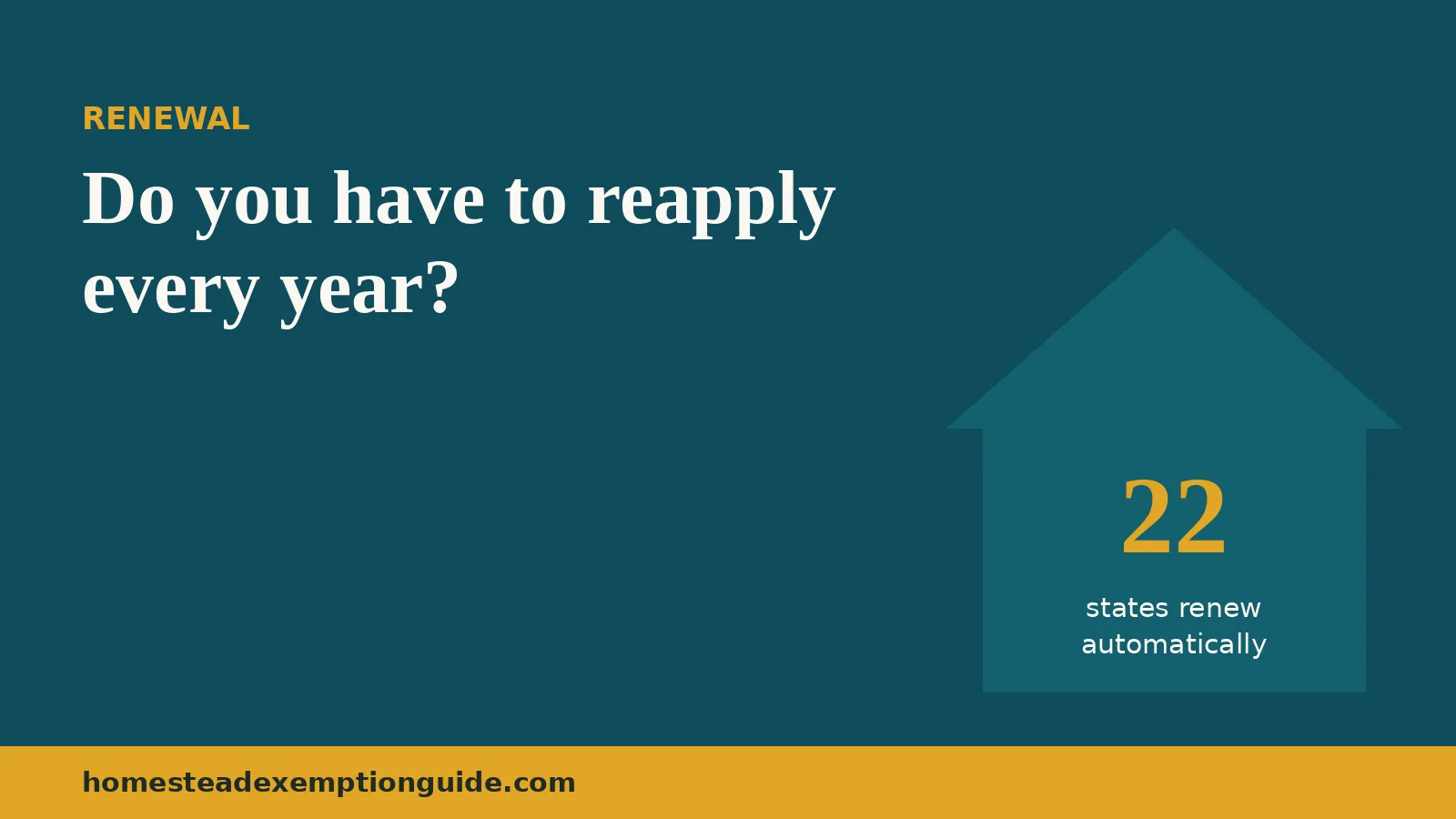
In 22 states the homestead exemption renews on its own while you keep living in the home, including Florida and Texas. In 9 states here you must apply again each year or each period.
States where you must reapply
| State | Renewal rule |
|---|---|
| Connecticut | Relief lasts for a two-year period. You must reapply every two years; the assessor notifies you when to refile. |
| Kansas | These are refund claims filed each year with the Department of Revenue, not with the county. |
| Missouri | The credit is claimed each year for the taxes or rent paid that year. |
| Nebraska | Owners 65+, disabled owners and most other categories must file Form 458 and the Schedule I income statement every year. 100% disabled veterans (4V) and qualifying surviving spouses (4S) file Form 458 only with their first application or after a late filing. |
| Nevada | After the first affidavit, the county assessor mails a renewal form each year for the veteran, surviving spouse and blind exemptions. |
| North Dakota | Homeowners apply for the Primary Residence Credit annually. |
| Tennessee | Approved homeowners get a tax relief voucher with next year's bill and must present it to the collecting official before the deadline. |
| Vermont | The Homestead Declaration must be filed annually. |
| Wisconsin | A new claim is filed for each year. |
States where it renews on its own
California, Florida, Hawaii, Idaho, Indiana, Iowa, Kentucky, Maine, Maryland, Michigan, Minnesota, Mississippi, Montana, New Hampshire, New Mexico, New York, Ohio, Oklahoma, Pennsylvania, South Carolina, South Dakota, Texas.
Even where it renews, you must tell the assessor if you move out, rent the home or change ownership. Senior and income-based breaks often need a fresh application each year.
State and county guides in this article
- CACalifornia$7,000 off assessed value
- FLFlorida$50,000 off assessed value
- HIHawaii$120,000 off assessed value
- IDIdaho$125,000 off market value
- INIndiana$40,000 off assessed value
- IAIowa10% of value
- KYKentuckyNo general exemption
- MEMaine$25,000 off market value
- MDMaryland10% assessment cap
- MIMichigan5% assessment cap
- MNMinnesota$38,000 off market value
- MSMississippi$300 tax credit
- MTMontanaNo general exemption
- NHNew HampshireNo general exemption
- NMNew Mexico$2,000 off assessed value
- NYNew York$30,000 off market value
- OHOhioNo general exemption
- OKOklahoma$1,000 off assessed value
- PAPennsylvaniaVaries; see details
- SCSouth CarolinaNo general exemption
- SDSouth DakotaNo general exemption
- TXTexas$140,000 off assessed value
- CTConnecticutNo general exemption
- KSKansasNo general exemption
- MOMissouriNo general exemption
- NENebraskaNo general exemption
- NVNevadaNo general exemption
- NDNorth Dakota$1,600 tax credit
- TNTennesseeNo general exemption
- VTVermontNo general exemption
- WIWisconsinNo general exemption
Figures come from the official sources linked on each state and county page. Rules change, so confirm with the official source before you file.